In Orange County, closets are no longer treated as an afterthought. They are part of the design conversation, part of the resale value equation, and part of how a home feels day to day. Homeowners who invest in high-end kitchens, premium flooring, and refined interior finishes increasingly expect the same level of detail from their storage spaces. A well-designed custom closet improves daily routines, protects your wardrobe and accessories, and creates the kind of visual calm that makes a home feel organized and elevated.
That is why the decision is not simply whether to “add shelves” or “install a closet system.” The real decision is whether you choose a custom closet builder who can design and execute a complete storage solution that aligns with your lifestyle, the architecture of your home, and the standard of craftsmanship Orange County homeowners demand. A true builder brings design intelligence, material expertise, and installation precision. The result is a closet that looks tailored, functions effortlessly, and holds up over years of use.
At Amytis Exclusive Kitchens, we approach custom closets the way we approach luxury cabinetry: as a system. The best results come from the right planning, premium materials, thoughtful organization, and disciplined installation. This guide will help you understand what to look for when choosing a custom closet builder in Orange County, how to compare proposals, and how to ensure your final result feels genuinely high-end rather than generic.
Why Choosing the Right Custom Closet Builder Matters
A closet is one of the most heavily used storage areas in any home. Doors open and close multiple times a day, drawers carry weight, shelves take constant load, and hardware is tested continuously. When the system is not engineered properly, the issues show up quickly: sagging shelves, misaligned doors, drawers that wobble, surfaces that chip, and a layout that never truly fits your needs.
In contrast, a high-end custom closet should feel stable, quiet, and intentional. Drawers should glide smoothly. Doors should align cleanly. Shelving should feel solid and correctly supported. More importantly, the storage plan should be built around how you use the space. Your closet builder should help you decide where to place hanging sections, drawers, shoe storage, accessory zones, hampers, and specialty features so the closet supports your routine instead of forcing you to adapt to it.
Additionally, the “finish level” also matters. Many homes emphasize open layouts, modern lines, and curated interior design. A closet that looks like a basic modular kit can feel out of place in an otherwise premium home. Choosing the right builder ensures the closet complements the home with refined finishes, clean detailing, and an architectural appearance that looks built-in and permanent.
Start With Your Closet Goals and Lifestyle Needs
Before you compare builders, get clear on the outcome you want. The best closet projects begin with a lifestyle conversation, not a measurement appointment. A builder who is focused only on linear feet and pricing is often selling a product, not delivering a solution. You want a builder who asks the questions that define a high-performing system.
Think through your daily habits. Do you get dressed quickly in the morning and need everything visible and accessible? Do you rotate your wardrobe seasonally and need flexible sections for long hang, short hang, and folded storage? Do you have a significant shoe collection or prefer streamlined storage with minimal display? Are accessories a big part of your wardrobe, such as watches, jewelry, handbags, sunglasses, and belts?
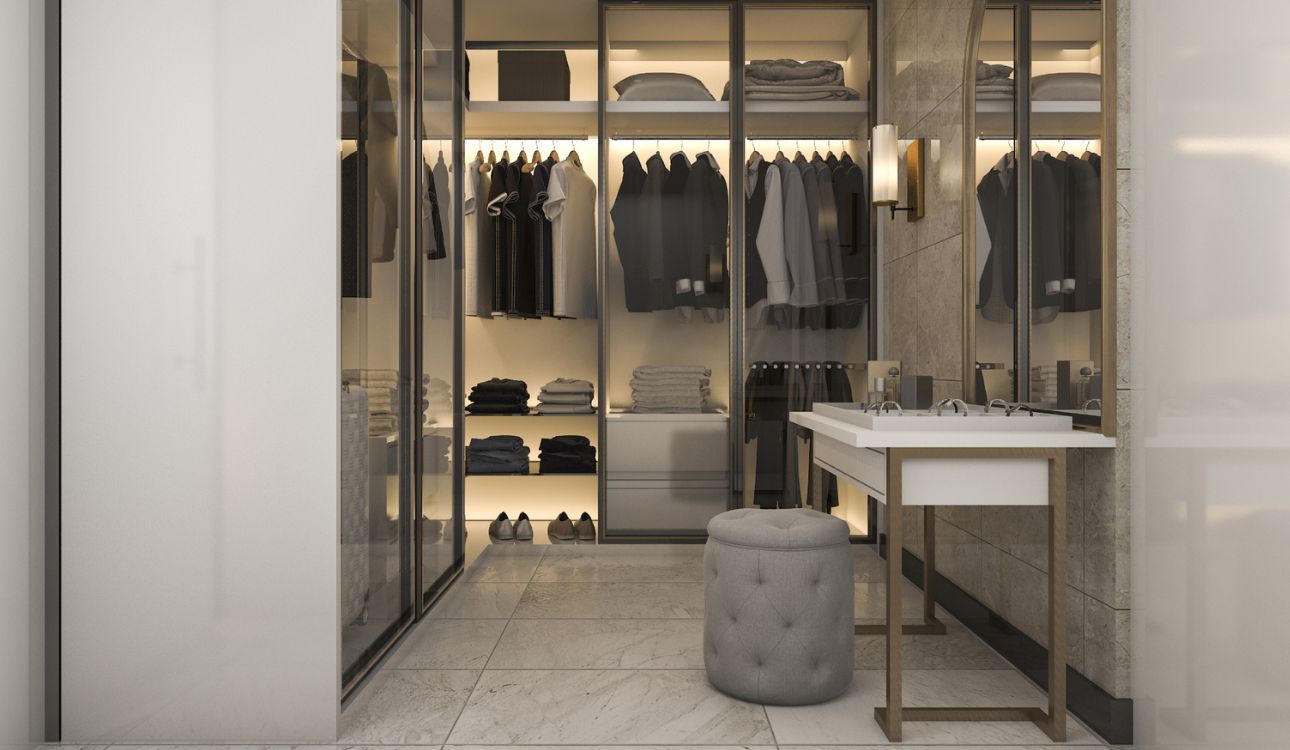
Also consider how the closet relates to the bedroom. In many Orange County homes, the primary suite functions like a personal retreat. If your closet is part of that experience, you may want integrated lighting, a dressing area, a vanity, a full-length mirror, or a seating bench. A custom closet builder should be able to translate those goals into a plan that fits the space and feels cohesive with the surrounding finishes.
What a High-End Custom Closet Builder Should Offer
The best closet builders bring a combination of design capability, material knowledge, and installation expertise. They do not simply install components. They design a storage system and deliver it with precision.
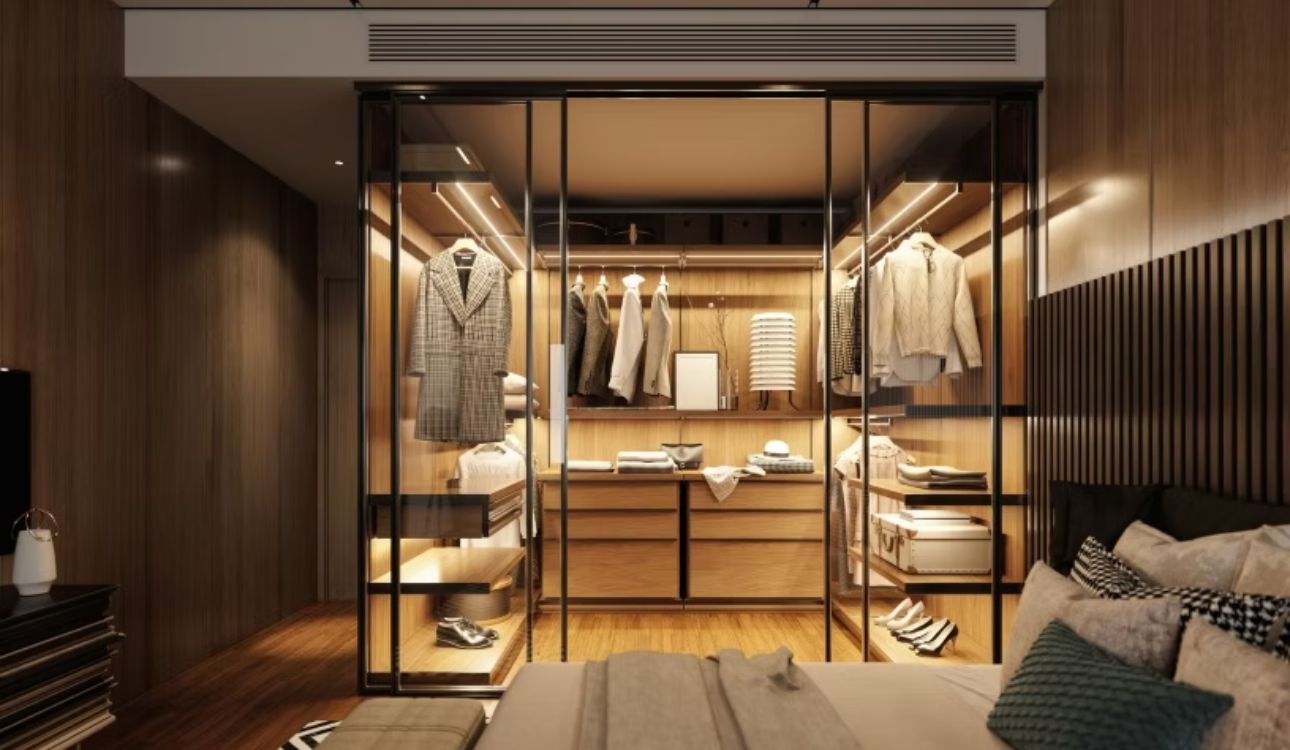
Design and planning should be part of the process. A builder should provide a layout that addresses your storage categories, clearance needs, door swing considerations, and traffic flow. If you are building a walk-in closet, zone planning matters. Shoes, hanging, folded items, accessories, and seasonal storage should be placed logically so the closet feels intuitive.
Material quality should be clearly explained. Many closet systems look similar in photos, but the difference appears in thickness, edge quality, finish durability, and hardware performance. A builder should be transparent about board thickness, edge banding, drawer construction, and finish options. They should be able to explain which materials perform best in high-use areas and which finishes deliver the most premium look.
Hardware and mechanisms should be specified like a true cabinetry project. Soft-close drawers, quality hinges, and reliable pull-out systems matter. If your builder cannot articulate what hardware they use and why it is chosen, you are likely dealing with a basic system rather than a luxury build.
Installation standards are often the make-or-break factor. Even premium materials can look average if installation is rushed or inaccurate. A high-end builder should ensure clean reveals, flush alignment, stable anchoring, and protection of surrounding finishes. They should also handle inevitable real-world conditions in homes, such as uneven walls, out-of-square corners, or floor variations, without compromising the final look.
How to Evaluate Craftsmanship and Quality Before You Commit
Many homeowners compare closet builders by price alone. That is usually a mistake. Two proposals can look similar on paper while delivering very different outcomes. The goal is to evaluate quality in a way that is tangible.
Start by reviewing the builder’s portfolio, but do not rely only on staged photos. Ask to see close-ups of drawer fronts, shelf edges, and door alignment. Look for clean lines, consistent spacing, and solid detailing. If possible, visit a showroom or request to see sample materials in person. The difference between a basic finish and a premium finish becomes obvious when you touch the surfaces, open the drawers, and see the edges in real lighting.
Ask the builder how they handle corners, transitions, and special conditions. For example, how do they solve sloped ceilings, angled walls, or tight clearance around doors? Do they offer custom filler panels and trim details so the system looks built-in? Do they design around HVAC vents, outlets, attic access panels, or lighting locations without leaving awkward gaps?
Also evaluate how the builder communicates. A high-end project requires coordination and clarity. If the builder is inconsistent in communication during the sales phase, that pattern often continues through production and installation. You want a team that explains the process, sets expectations, and follows through.
Key Questions to Ask a Custom Closet Builder in Orange County
A strong consultation is one of the best indicators of a strong result. The right builder should welcome detailed questions and answer them clearly.
Design approach: Do they start with a needs assessment, or do they push pre-set packages? Do they provide design renderings or detailed layouts? How many revision rounds are included?
Materials: What is the board thickness? What is the finish type? How is edge banding handled? Are there upgrades for higher durability, such as thicker panels, better surface coatings, or premium laminates?
Drawers and hardware: Are drawers dovetailed or another construction style? Are the drawer slides soft-close and full-extension? What hinge systems are used for doors? Are pull-outs, hampers, and specialty systems from recognized hardware manufacturers?
Installation and scheduling: Who installs the project: employees or subcontractors? How long does installation typically take? How is the home protected during installation? If there are touch-ups needed after completion, what is the process?
Warranty and service: What is covered, and for how long? How quickly do they respond to issues like a drawer adjustment, hinge alignment, or a hardware problem?
Understanding Pricing Without Getting Trapped by “Apples to Oranges” Quotes
Custom closet pricing can vary dramatically in Orange County. The challenge is that pricing differences often reflect hidden quality differences. A lower quote may omit key items that you assume are included, or it may rely on thinner materials and basic hardware. A higher quote may include premium finishes, upgraded hardware, lighting coordination, or more sophisticated design work.
To compare quotes fairly, ask each builder to itemize the scope. The quote should clarify the number of drawers, doors, pull-outs, specialty systems, and upgraded features. It should also specify finishes and material thickness. If one builder includes soft-close drawers and another does not, the difference is not just price. It is the function and longevity.
Also, pay attention to what is not included. Lighting is often excluded and later becomes a surprise cost. Demolition of existing closet systems may not be included. Wall repair or painting may not be included. If your closet builder is coordinating with a remodel, you may need clarity on whether they handle these items or whether you need separate trades.
Design Details That Separate a Luxury Closet From a Basic System
Luxury closets are defined by more than finish color and drawer count. They are defined by proportion, alignment, and the sense that every component was planned intentionally.
One key factor is zoning. A closet should have clear areas for hanging, folding, accessories, and specialty items. A walk-in closet that mixes everything randomly will feel cluttered no matter how expensive it is. When the zones are planned, the closet feels easier to use and easier to maintain.
Another factor is vertical planning. The most common mistake in closet design is poor use of vertical space. A premium builder will plan double-hang sections where appropriate, keep long-hang areas only where needed, and use upper storage strategically for seasonal items. They will also ensure the heights work for real people, not just standard template dimensions.
Drawer placement matters. Drawers should be positioned for comfort and accessibility. Deep drawers for heavier items should be supported properly. Shallow drawers for accessories should be close to the dressing area. If you want a boutique feel, a builder can incorporate drawer inserts, velvet-lined compartments, and dedicated organization for watches, jewelry, and sunglasses.
Lighting integration is a major differentiator. A closet with the right lighting feels premium and functional. That can include overhead lighting, accent lighting, or interior lighting for specific zones. Even if the builder is not performing electrical work, they should design around lighting locations and coordinate with your electrician.
Walk-In vs Reach-In Closets and What to Expect From Each
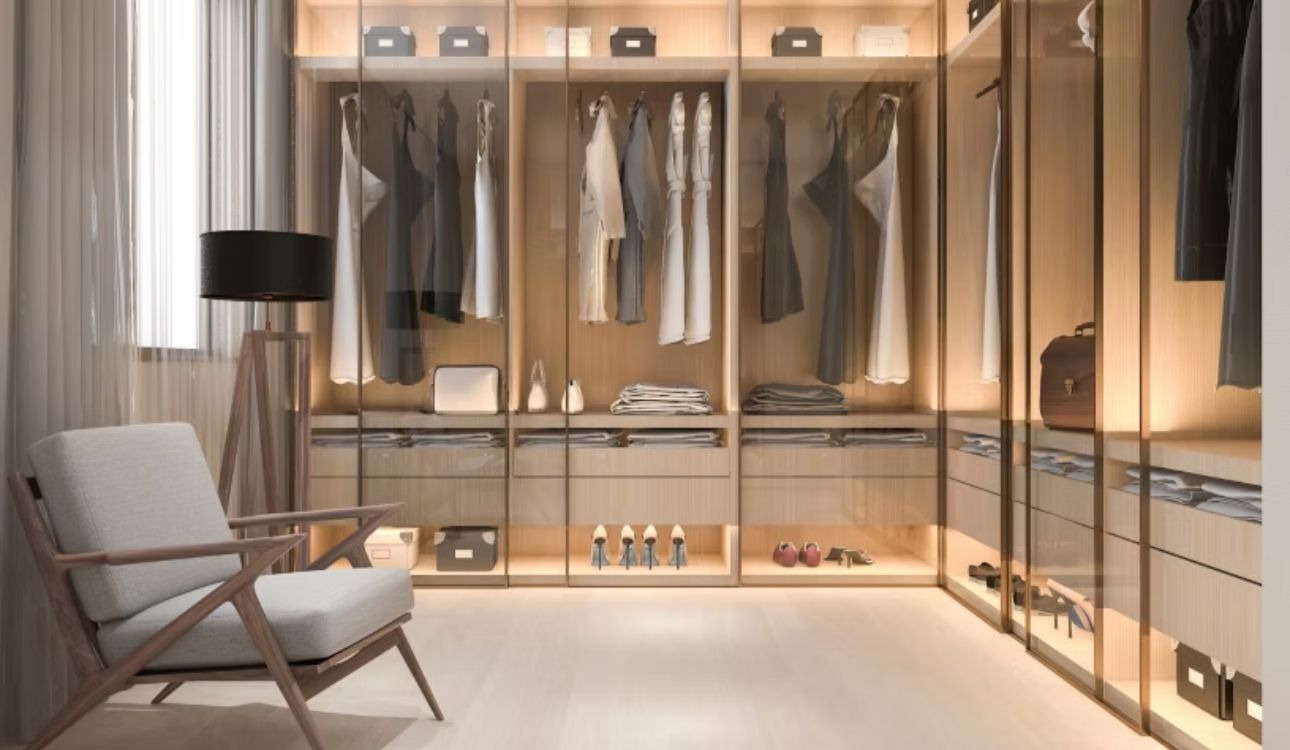
In Orange County, both walk-in and reach-in closets can be luxury spaces if designed correctly. Walk-ins provide more room to create zones, add features like seating or a vanity, and display items in a curated way. Reach-ins require more precision to maximize storage and keep the look clean.
For walk-ins, the builder should focus on flow. The closet should not feel cramped or obstructed by awkward door swings. Hanging sections should be placed so you can see and access your wardrobe easily. Specialty storage should be located where it makes sense, not where it simply fits.
For reach-ins, the builder should focus on maximizing usable space without making the closet feel overbuilt. Clean panel alignment, well-placed drawers, and a smart mix of hanging and shelving can make a reach-in closet feel surprisingly premium. If your reach-in closet is in a modern home, consider clean lines, minimal hardware, and a consistent finish that matches the room’s design language.
How to Avoid Common Custom Closet Mistakes
One common mistake is prioritizing appearance over function. A closet can look beautiful and still fail if it does not match your wardrobe needs. That is why the planning conversation matters so much. Your builder should quantify your storage requirements, such as how many long-hang items you have, how many drawers you need, and how much shoe storage is realistic.
Another mistake is ignoring future use. If your lifestyle is changing, the closet should accommodate that. If you are planning to expand your wardrobe, travel more, or adjust your routine, flexibility can be built into the design. Adjustable shelving, modular accessories, and adaptable zones can help the closet remain useful over time.
Finally, homeowners often underestimate the impact of finishing details. Exposed gaps, uneven reveals, and inconsistent trim work can make a closet feel like a kit. A true custom closet builder should deliver a result that looks built-in and intentional, with clean transitions and refined detailing.
When a Luxury Showroom Experience Helps You Make Better Decisions
Photos and online inspiration are useful, but they are not enough to evaluate quality. If you are investing in a custom closet, it can be valuable to see materials and hardware in person. A showroom experience allows you to open drawers, feel surfaces, compare edge quality, and see how finishes look under real lighting. It also helps you understand what “premium” actually means in practice.
For Orange County homeowners, that level of clarity can prevent costly mistakes. Many people choose a finish based on an online image and later realize it does not match the home’s lighting or surrounding materials. Many people choose a layout without testing how it feels to stand in the space. A guided showroom and design process reduces that risk and helps the final result feel cohesive and high-end.
Why Amytis Exclusive Kitchens Is a Strong Partner for Custom Closets
At Amytis Exclusive Kitchens, we understand that a custom closet is part of a larger lifestyle and design investment. Our work in high-end cabinetry and luxury home projects informs how we approach closets: as architectural storage systems that must perform flawlessly and look refined. We focus on premium materials, intelligent layout planning, and disciplined execution so the final result feels intentional and lasting.
Whether your goal is a boutique-style walk-in closet, a clean and modern reach-in system, or a complete storage redesign integrated into a broader remodeling plan, our team can help you clarify your vision and deliver a solution that matches the standards of Orange County’s most discerning homeowners.
Conclusion
Choosing the right custom closet builder in Orange County is ultimately about protecting the quality of your investment. A closet should not just look good on installation day. It should function effortlessly, maintain alignment, and feel like a natural extension of your home’s design for years to come.
The right builder will guide you through a disciplined process: understanding your lifestyle needs, designing a system that solves real storage problems, selecting materials and hardware that hold up under daily use, and executing installation with precision. If you want a closet that feels truly high-end rather than generic, prioritize design capability, material transparency, and craftsmanship standards over low pricing.
If you are ready to explore a premium custom closet solution, Amytis Exclusive Kitchens can help you plan a system that elevates your home, simplifies your routine, and delivers the refined look and performance Orange County homeowners expect. To get started, contact us at (949) 297-4838 to schedule a design consultation and discuss your custom closet goals.